





How We Scaled an Online English School Through Google, YouTube, Meta, and TikTok and Increased the Value of Every Lead
Services

Challenge
ANTYSHKOLA is an English-language school with several directions: online courses, offline programs, and children’s courses. The project was developed over a long period of time, so the key task was not only to launch separate campaigns, but to build a system that could continuously discover new traffic sources, improve the performance of existing channels, and scale what worked consistently.
Goal
Scale lead volume without losing quality. Improve the performance of existing channels, constantly look for new traffic sources, platforms, and working combinations, and build a system in which every validated channel can be pushed to the limit of scaling while economics remain stable.
Results


Core tasks of the growth system
- not to stop at a single channel even when it was already delivering results
- to continuously improve the economics of existing campaigns without losing volume
- to find new traffic sources before they became mainstream in the market
- to scale working combinations only when the results were stable
- to build a system where new channels did not replace old ones, but strengthened the overall performance model
Meta Ads: scaling through look-alikes and creatives
At the first stage, the main focus was on Meta Ads. In that period, look-alike audiences performed best, so a lot of attention was paid to source-audience quality, segmentation, and constant video creative testing.
Systematic creative testing helped us find the right video format — one that worked especially well in combination with look-alike audiences and delivered stronger results.
Google Ads: searching for new growth points
Over time, the focus expanded to Google Ads. We tested search campaigns for offline directions, children’s courses, and online courses.
Different search approaches were tested separately:
- optimization around English-level tests
- competitor search campaigns
- informational queries related to learning English
Search remained a stable source of hot demand, but the real breakthrough came from YouTube.
YouTube Ads: the strongest scaling driver
Within the Google ecosystem, YouTube Ads started showing the most promising results. Thanks to a large number of tests, we found working combinations across audiences, interests, placements, conversion types, creatives, and landing pages.
As a result, YouTube advertising started outperforming Facebook and significantly increased both the volume of leads and the overall performance of the system.
TikTok Ads: early testing of a new channel
When Meta, Search, and YouTube were already working steadily, the next stage was testing TikTok Ads. At that moment, the platform was still new and not well explored in the market, so most approaches had to be tested from scratch.
Through systematic testing, we found the right balance of bid, conversion cost, and user journey on landing pages. This added one more growth channel and strengthened the overall lead generation system.
Performance Max: additional scaling inside Google
The final major stage was Performance Max. These campaigns improved overall ROAS by optimizing across several Google formats at once, including the Display Network, Demand Gen, video inventory, and other tools in the ecosystem.
Operating strategy
The core strategy had two layers.
The first task was to continuously improve and scale everything that was already working — as long as the economics remained stable.
The second, equally important task was to constantly search for new traffic sources, platforms, formats, and working combinations that could unlock the next level of growth.
This made it possible to avoid dependence on a single channel and constantly discover new scaling opportunities.
Result
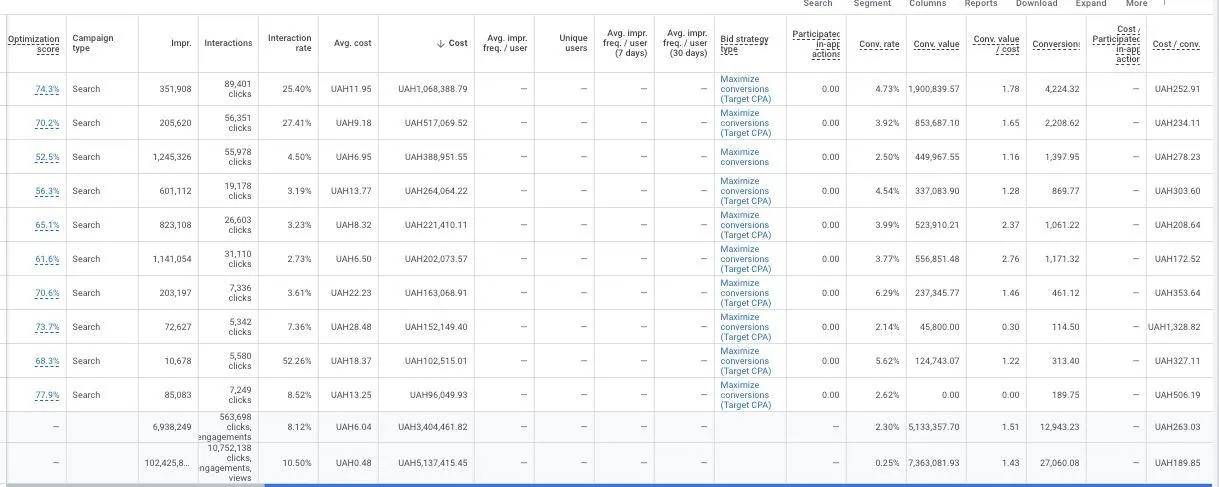
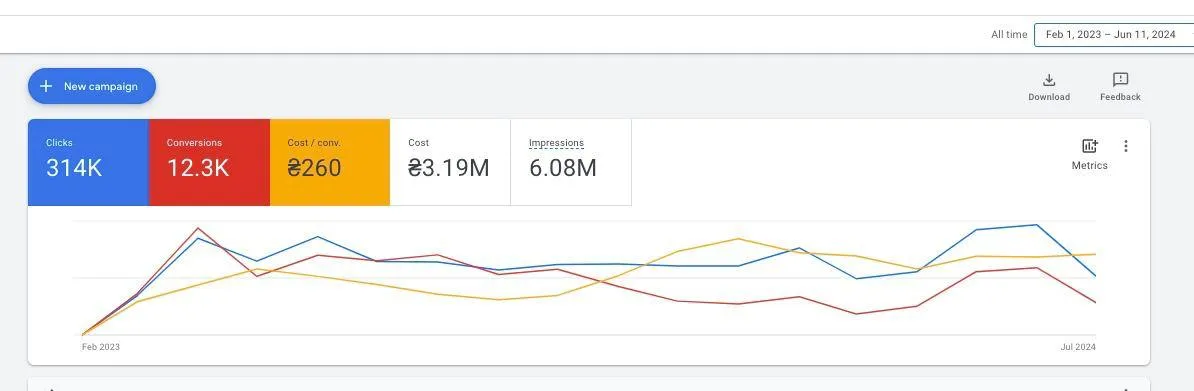
The final assessment included results from the core traffic sources: Meta Ads, Google Search, YouTube Ads, TikTok Ads, and Performance Max.
- 30,000+ leads in total over the full period of work
- average lead cost across different sources — from $3 to $10
- ROAS varied depending on the channel, creatives, landing pages, and the stage of scaling
The main result of this case was not a single “magic” channel, but the creation of a system in which every new working tool reinforced the whole performance model.
What Worked

Strong work with look-alike audiences in Meta Ads during the active growth phase of the channel.
Constant video creative testing — this is what helped identify the formats that worked best.
YouTube Ads as a separate scaling driver — this channel delivered stronger performance than Facebook.
A systematic search for new traffic sources: Search, YouTube, TikTok, and Performance Max did not replace one another, but strengthened the system.
The strategy of “optimize what already works and search for new combinations in parallel” delivered stable scaling without a loss in quality.
Similar projects
$233k in Bookings at an Average Cost of $9: Systematic Customer Acquisition for a Restaurant in Miami


How We Built a Stable Flow of Leads for Running Training Through a Simple Offer and Proper Segmentation




How We Found Clients with $1M+ Losses Through Advertising in the Investment Arbitration Niche

How We Reduced Order Cost from $35 to $3 in the Dessert Niche Through Google Ads

.webp)
Growth of an Info Business Project in Poland to $0.28 per Follower and Stable Consultation Monetization

$3.31 per Conversation in Designer Clothing: How We Generated 271 Inquiries in a Premium Segment

How We Solved a Low Conversion Problem and Generated 1,300+ Leads for an English Language School

2,000+ Leads at ~$8: How Proper Optimization Delivered Scale for an English School
600+ Contacts for a Restaurant in Kyiv: How We Turned Ads from “Likes” into Real Reservations


Coworking in Kyiv: 586 Leads at $3.97 and B2B Growth Through Proper Qualification

How We Generated 90+ Residence Permit Leads in Europe Through Audience Segmentation and Different Offers

How We Turned Chaotic Instagram Advertising into a Stable Sales System for a Furniture Brand


How Facebook Ads Generated Over UAH 578,000 in Sales for a Gifts E-commerce Store in 1 Month

Supplements Online Store: How We Optimized Advertising and Increased Orders
Over $350K in E-commerce Revenue in the Electronics and Gadgets Niche
Over $133,000 in Revenue Generated Through Advertising for an Online Decor Store

How We Generated Over UAH 11.6 Million in Revenue for an Electronics Online Store

How We Significantly Increased Sales of Asian Snacks Through Advertising

From Ad Spend to Profit: How We Generated $60,000 with Facebook Ads from a $7,133 Budget in 3 Months


How We Scaled a Military Clothing Store to 568% ROAS and $89,666 in Revenue


How We Scaled a Women’s Lingerie Brand with Its Own Production Through Google and Meta

Lead Generation Launch for a Sales Department and Recruiting Consulting Business

How We Tested and Scaled a Tech Subscription Service Through Meta + Google

How We Scaled a Crypto Exchange Through 2 Channels and Tested 2 Different Acquisition Models

How We Grew an Automotive YouTube Channel to 4,250 Subscribers in One Month


How We Brought 1,000+ Attendees to a Business Forum in Europe Through Google Ads
How We Increased ROAS by One Third for an E-commerce Fashion Brand Through Proper Ad Segmentation
How We Generated 802 Leads at $1.33 for an International Business Forum Through Advertising + SMM

How We Launched Wholesale Fuel Sales from Scratch and Got B2B Leads in the First 3 Days

How We Built a Sales System for a YouTube Income Course Through a Creator’s Personal Blog

How We Built Marketing for Premium Dental Clinics from Scratch: 2 Clinics + the Orthodontist’s Personal Practice
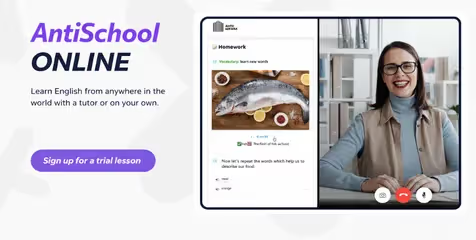
How We Scaled an Online English School Through Google, YouTube, Meta, and TikTok and Increased the Value of Every Lead

UAH 7.2M Through Google + 5,941 Sales from Meta for Alcohol E-commerce

How Product Segmentation Drove 11,081 Conversions for Household Goods

How We Systematically Launched Donations for Children with Serious Illnesses Through Meta Ads

How We Rebuilt Lead Generation and Improved Lead Quality for UK University Admissions


From Zero to 197 Leads for a Construction Company Across 3 Countries
How We Grew from 50 Orders to 500+ per Month and Expanded 11x in Six Months




A Hiring Strategy for Mass-Market and Niche Specialists for a Recruitment Agency

From $0.67 per Registration: How We Acquired 19,824 Users for a Freelance Service

Building a Stable Lead Flow for a Business Club in Poland and Germany


Scaling a Premium Wedding Dress Brand in the USA: $6,443 Budget — 761 Leads


How We Rebuilt Analytics and Stopped Budget Waste for CarProf Autokeskus


Is your marketing not delivering results? We’ll show you how to fix it.


Let’s break down your project