





Coworking in Kyiv: 586 Leads at $3.97 and B2B Growth Through Proper Qualification
Services

Challenge
GNRTR is a coworking space in Kyiv that operates in two directions at once: B2C (individual workspaces) and B2B (offices, conference rooms, and events).
The main sales channel was messaging (direct / messenger), where the initial consultation and closing happened.
One B2B inquiry could be worth dozens of B2C bookings, so the goal was not just to drive leads, but to filter for quality.
Goal
Increase the number of conversations.
Lower the cost per lead.
Improve lead quality.
Shift the focus toward the B2B segment.
Results
Key challenges before launch
- too many low-quality leads
- mixed B2C / B2B audience
- no focus on higher-value clients
How we solved it
- rebuilt the chatbot and added qualification
- separated offers and creatives
- scaled the B2B direction specifically
Results
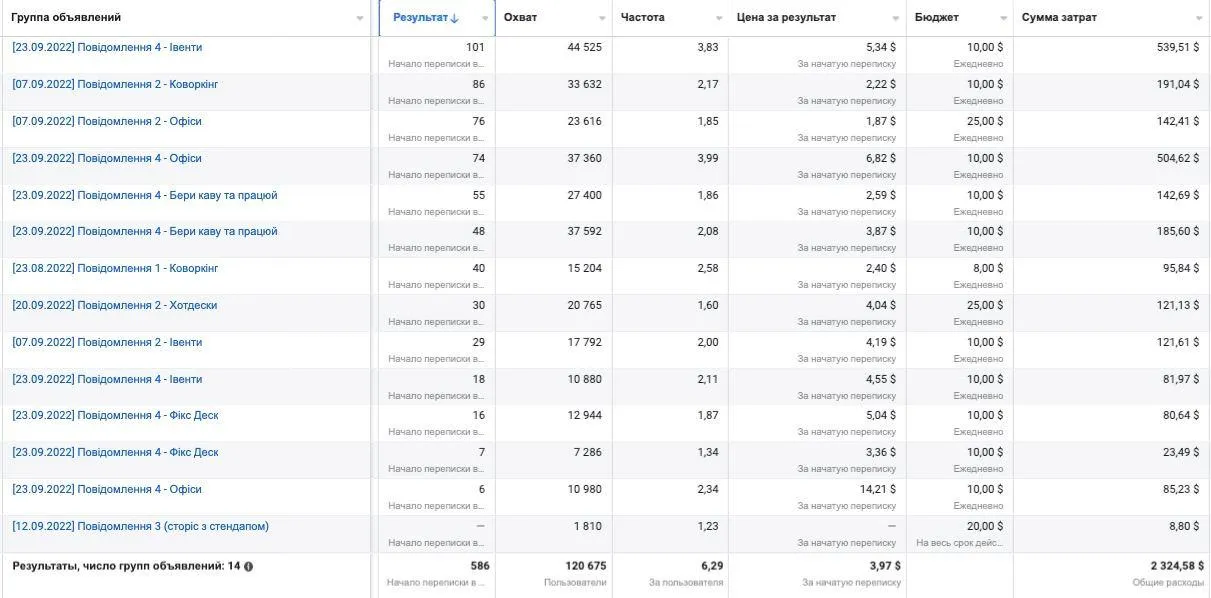
We generated 586 conversations at a total budget of $2,324.58.
The average cost per conversation was $3.97.
At the same time, the share of B2B inquiries increased significantly, which directly impacted revenue.
In practice, we created a stable flow of qualified leads at a reasonable cost, with a clear shift toward the more valuable segment.
- The messaging strategy matched the decision-making process of the niche better.
- Large-scale creative testing helped identify the best “offer → audience” combinations.
- Separating B2C and B2B removed mixed demand.
Strategy
The main focus was messaging ads (Messenger / Direct), because in this niche decisions are made through dialogue, not through a form. This made it possible to qualify the lead immediately and avoid wasting budget on irrelevant traffic.
Creatives
- business office creatives
- coworking for freelancers
- events and conferences
- lifestyle creatives
Different creatives generated different lead quality, so the key was not only to lower the cost, but to identify the combinations that brought B2B demand.
Segmentation
- B2C — workspace
- B2B — offices / events / halls
This allowed the algorithm to match audiences more accurately and increase the share of higher-value inquiries.
Chatbot
We completely rebuilt the logic: from basic, unfiltered questions to qualification questions and a guided path to inquiry submission.
- filtered out irrelevant leads
- identified hot prospects earlier
- increased the share of B2B inquiries
In practice, the chatbot became the filter that separated cheap B2C requests from valuable B2B clients.
Why it worked
In this case, the key factor was not the advertising itself, but the lead qualification system.
Without filtering traffic through the chatbot, the budget would have been spent on non-target clients.
What Worked

The messaging strategy matched the decision-making process of the niche better.
Large-scale creative testing helped identify the best “offer → audience” combinations.
Separating B2C and B2B removed mixed demand.
The rebuilt chatbot improved lead quality.
Focusing on the more profitable segment improved the business outcome.
Similar projects
$233k in Bookings at an Average Cost of $9: Systematic Customer Acquisition for a Restaurant in Miami


How We Built a Stable Flow of Leads for Running Training Through a Simple Offer and Proper Segmentation




How We Found Clients with $1M+ Losses Through Advertising in the Investment Arbitration Niche

.webp)
Growth of an Info Business Project in Poland to $0.28 per Follower and Stable Consultation Monetization

$3.31 per Conversation in Designer Clothing: How We Generated 271 Inquiries in a Premium Segment

How We Solved a Low Conversion Problem and Generated 1,300+ Leads for an English Language School

2,000+ Leads at ~$8: How Proper Optimization Delivered Scale for an English School
600+ Contacts for a Restaurant in Kyiv: How We Turned Ads from “Likes” into Real Reservations


Coworking in Kyiv: 586 Leads at $3.97 and B2B Growth Through Proper Qualification

How We Generated 90+ Residence Permit Leads in Europe Through Audience Segmentation and Different Offers

How We Turned Chaotic Instagram Advertising into a Stable Sales System for a Furniture Brand


How Facebook Ads Generated Over UAH 578,000 in Sales for a Gifts E-commerce Store in 1 Month

From Ad Spend to Profit: How We Generated $60,000 with Facebook Ads from a $7,133 Budget in 3 Months


How We Scaled a Military Clothing Store to 568% ROAS and $89,666 in Revenue


How We Scaled a Women’s Lingerie Brand with Its Own Production Through Google and Meta

Lead Generation Launch for a Sales Department and Recruiting Consulting Business

How We Tested and Scaled a Tech Subscription Service Through Meta + Google

How We Scaled a Crypto Exchange Through 2 Channels and Tested 2 Different Acquisition Models
How We Generated 802 Leads at $1.33 for an International Business Forum Through Advertising + SMM

How We Launched Wholesale Fuel Sales from Scratch and Got B2B Leads in the First 3 Days

How We Built a Sales System for a YouTube Income Course Through a Creator’s Personal Blog

How We Built Marketing for Premium Dental Clinics from Scratch: 2 Clinics + the Orthodontist’s Personal Practice
How We Scaled an Online English School Through Google, YouTube, Meta, and TikTok and Increased the Value of Every Lead

UAH 7.2M Through Google + 5,941 Sales from Meta for Alcohol E-commerce

How We Systematically Launched Donations for Children with Serious Illnesses Through Meta Ads

How We Rebuilt Lead Generation and Improved Lead Quality for UK University Admissions

From Zero to 197 Leads for a Construction Company Across 3 Countries


A Hiring Strategy for Mass-Market and Niche Specialists for a Recruitment Agency

From $0.67 per Registration: How We Acquired 19,824 Users for a Freelance Service

Building a Stable Lead Flow for a Business Club in Poland and Germany


Scaling a Premium Wedding Dress Brand in the USA: $6,443 Budget — 761 Leads


How We Rebuilt Analytics and Stopped Budget Waste for CarProf Autokeskus


Is your marketing not delivering results? We’ll show you how to fix it.


Let’s break down your project